
A home with pets benefits from a cleaning routine that is easy to repeat. Focus on the places your animals use, the materials in those rooms and prompt attention to accidents. The goal is manageable household care, not a promise that a pet-owning home will be odor-free or sterile.
Work from the places your pets actually use.
Look at favorite sleeping spots, doorways and routes between rooms. Wash pet bedding according to its label and maintain appropriate entrance mats. If a mat sits on a sensitive floor, check that its backing and care are suitable for that surface.
Grooming questions should follow your veterinarian's or groomer's advice for the animal. A carpet-care article is not a reliable reason to put every pet on the same bathing or flea-treatment schedule. Likewise, a suspected pest problem needs suitable animal-care or pest-control guidance rather than a cleaning guarantee.
Make vacuuming part of the floor plan.
Use settings and attachments appropriate to the carpet or other surface. Give busy routes suitable attention and maintain the machine according to its instructions. The Carpet and Rug Institute includes regular vacuuming among the foundations of carpet care.
Pick up toys, loose objects and other items that interfere with access. Pay attention to edges and furniture areas without pulling or damaging delicate trim. A workable routine can vary by room; it does not have to treat every part of the property as equally busy.
Treat furniture as furniture, not as more carpet.
Check the manufacturer's label before choosing an upholstery product or using a carpet-cleaning machine on a sofa. La-Z-Boy's published fabric-care guidance illustrates why a cleaning code matters: instructions for water-based spot care are not permission to saturate an entire piece.
A zipper does not prove that a cushion cover is machine washable. Ask about the specific fabric and construction, and avoid removing or laundering covers unless the manufacturer permits it. Frequent light care and appropriate overall cleaning are different jobs.
Respond to accidents without creating another problem.
For a fresh liquid spill on carpet, blot with a dry white absorbent cloth or plain white paper towel. Avoid vigorous rubbing and follow the carpet manufacturer's approved treatment guidance. Note the product and method used so a later assessment can account for them.
Recurring odor needs its own explanation. Describe the location, whether the carpet has dried and whether accidents have been repeated. A room that smells fresher after fragrance has been added has not necessarily had every underlying issue resolved.
Group professional work thoughtfully.
If both carpet and furniture need attention, list them separately. Include rooms, halls, stairs and each sofa, chair or sectional. Identify material labels, previous treatments and any item that cannot be moved. A combined visit should still have a clear scope for each surface.
Plan where pets and people will stay during the work and until treated areas are ready to use. Ask for return-to-use instructions for the actual material and treatment; a universal drying-time promise is not a substitute for that discussion.
Keep expectations realistic.
Cleaning can address ordinary soil and some marks, but it is not veterinary care, pest control or a promise to reverse fading and wear. Start with the specific concerns you want assessed so the next step reflects the problem rather than a generic pet-cleaning package.
Check the label before treating the favorite seat.
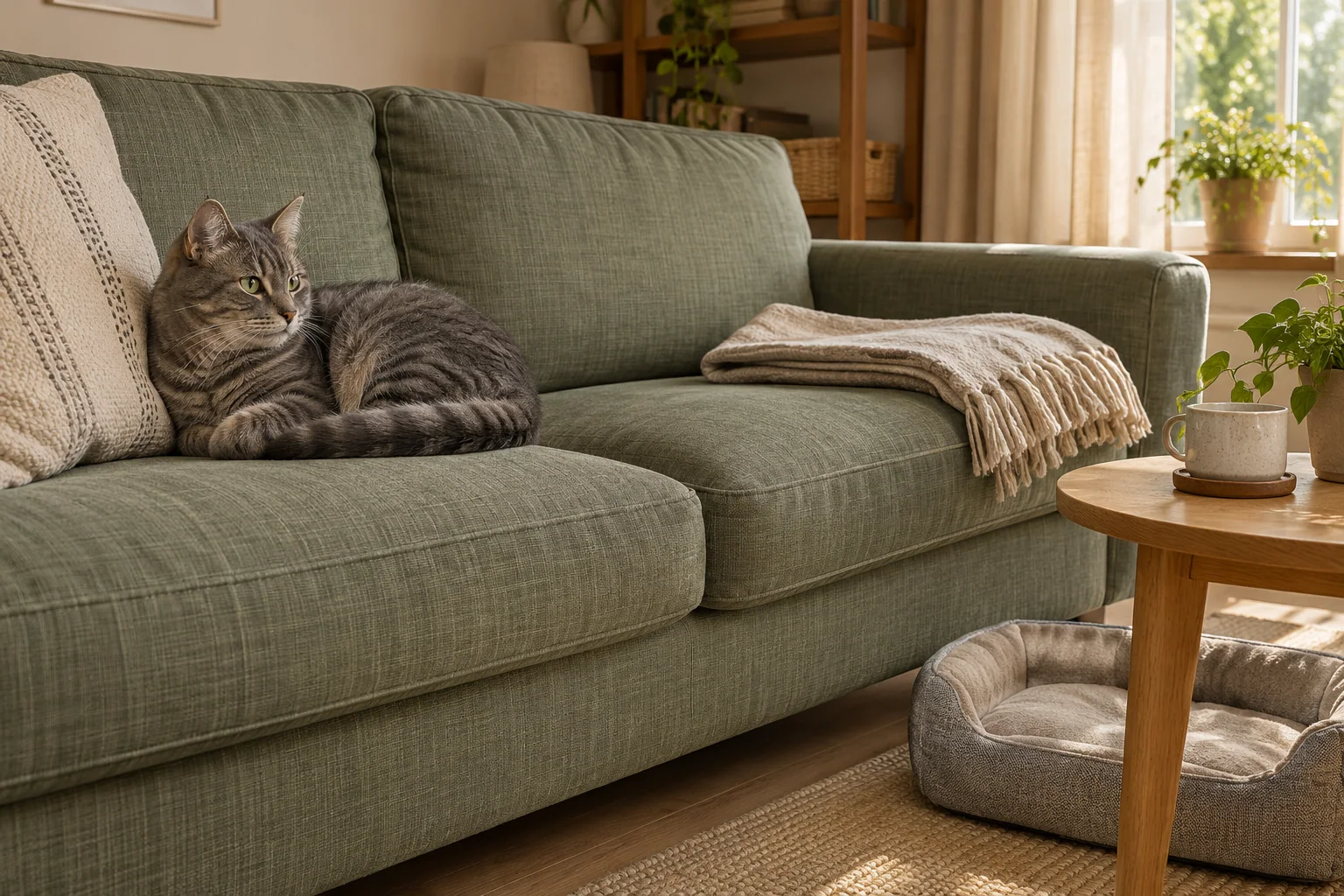
Furniture care codes help explain why two similar-looking sofas can need different treatment. Read the instructions for the actual piece. La-Z-Boy's guidance is a useful example of these distinctions, not a universal authorization for every other manufacturer's upholstery.
Swipe to compare →
| Code | General meaning in the manufacturer's guidance | Avoid assuming |
|---|---|---|
| W | Specified water-based spot products may be used. | That the whole piece can be saturated or hot-water extracted. |
| S | Specified water-free solvent care is used. | That a water-based carpet cleaner is suitable. |
| W-S | Specified water-based or solvent spot care may be permitted. | That every product or overall cleaning method is approved. |
| X | Vacuuming or light brushing, with no liquid or foam cleaner. | That a removable cover can simply go in the washing machine. |
If the tag is missing, tell the cleaner rather than guessing the code from the fabric's appearance. Include any loose cushions, contrasting panels and previous treatments when describing the piece. A zipper alone does not provide a washing instruction.
Keep the pet routine separate from treatment decisions.
Maintain bedding, mats and the vacuum using their labels. Plan where the animal will stay during work and until the treated area is ready to use. Ask for the actual return-to-use directions rather than assuming a scent-free surface or a fixed number of hours means every treatment is complete.
Repeated accidents or a change in the animal's habits belong in a separate conversation with a veterinarian. Cleaning the home and caring for the pet can support the same household routine without treating one as a replacement for the other.