
A pet accident can involve more than the mark you see on the carpet. The amount of liquid, the time before it was noticed, repeated accidents and the construction underneath all affect the situation. That is why a visible spot, a persistent odor and an affected backing or pad should not be treated as one identical problem.
The useful response is prompt, material-aware care and a clear account of what happened. You do not need to diagnose the chemistry yourself, and a cleaning company should not use blanket disease claims to persuade you to book.
Start with the liquid that can still be absorbed.
The Carpet and Rug Institute recommends blotting liquids with a dry white absorbent cloth or plain white paper towel. Blot rather than scrub. A colored cloth can transfer dye, while aggressive rubbing can alter the carpet's texture and spread the concern beyond the original area.
Use the carpet manufacturer's guidance for any further treatment. Avoid stacking several household products onto the same spot or flooding it in an attempt to rinse everything away. Record what you have already used, even if it was described as a pet cleaner.
A stain and an odor are different observations.
A spot can remain after the liquid is gone, and an area may smell even when it looks fairly normal. Neither observation by itself establishes the extent of the affected material. Repeated accidents in one location deserve a different discussion from one small recent spill.
Describe whether the odor returns after drying, whether the mark has changed and which earlier treatments seemed to help or made it worse. Fragrance can change what a room smells like without demonstrating that the source has been addressed.
Do not overlook the layers beneath the surface.
Liquid can move beyond the visible pile depending on the amount and construction. A professional should explain what the proposed treatment can reach and which concerns need separate assessment. Surface cleaning should not automatically be sold as complete correction of backing, padding or floor problems.
Ask whether any additional odor work is included and what limitations apply. Repair, replacement or work below the carpet is a separate decision from an ordinary cleaning quote. Do not assume it is part of the appointment simply because the request mentions pets.
Be cautious with heat and repeated experiments.
CRI specifically advises against a household steam cleaner for urine spots because heat can set the stain and smell. That is not a reason to guess at a different strong chemical recipe. Stop and get suitable advice if the material instructions are uncertain or previous attempts have changed the area.
Keep people and pets away from any area being treated as the product instructions require. Questions about a pet's health or a change in toileting habits belong with a veterinarian, not a carpet-cleaning diagnosis. This guide does not establish that a stain has caused an illness.
What to include in the inquiry.
- Where the accident occurred and whether it has happened there before.
- When it was noticed and the approximate visible area.
- Whether the concern is staining, odor or both.
- The cleaning products and methods already tried.
- Any known carpet material or care instructions.
Those details help us discuss appropriate carpet care and a clear scope without guaranteeing every stain or odor can be removed.
Separate the visible spot from the layers below.
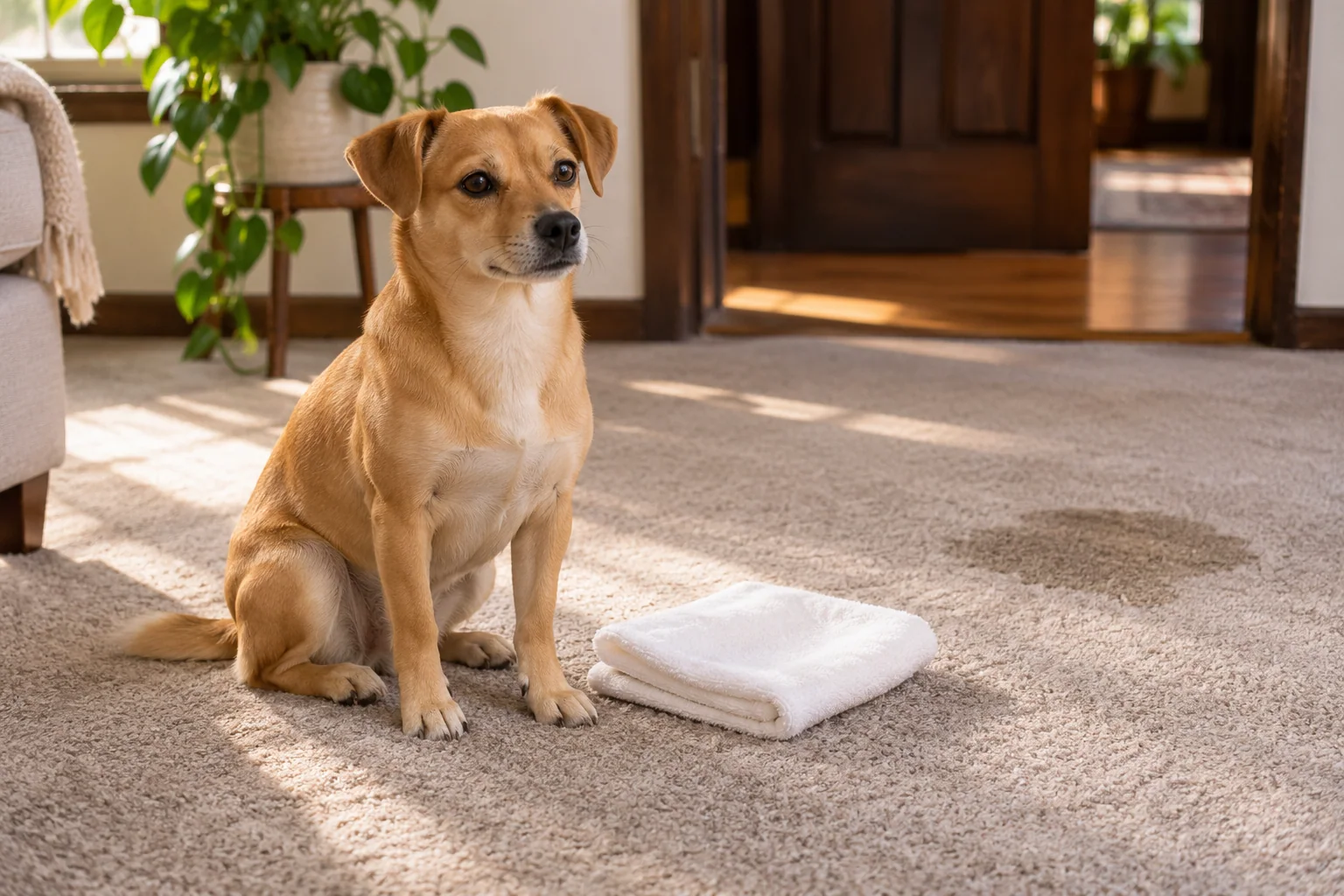
CRI's urine bulletin explains that urine can change carpet dyes and affect the bond between backing layers. Some marks may be permanent. The response should therefore distinguish cleaning a deposit from correcting color change or damage.
Swipe to compare →
| Observation | What it helps explain | What it does not establish |
|---|---|---|
| One recent damp spot | The location for prompt absorption and material-appropriate care. | Whether every layer underneath stayed dry. |
| A repeated accident in one area | Why a closer discussion of backing, cushion and odor may be needed. | That the same surface treatment will solve every recurrence. |
| Color remaining after cleaning | A possible need to distinguish residue from dye damage. | That more product will restore the original color. |
| Odor returning after drying | A reason to revisit the history and proposed reach of treatment. | Proof of a particular medical risk or a guaranteed need for replacement. |
Give the cleaner a useful incident history.
Describe the first time you noticed the concern, whether accidents have happened there more than once and whether previous care reached only the visible surface. List product names rather than relying on the label pet-safe or enzyme cleaner to explain what was used.
If padding, backing or the underlying floor may be involved, ask what assessment is included and what would need separate agreement. A surface-cleaning price should not leave you assuming that every lower layer is part of the work.
The household steam-cleaner warning is about treating urine spots. It is not a blanket claim that every professional process involving heat is unsuitable. Material, contamination and the actual method still need individual consideration.