
The first useful question about a carpet stain is not which strong household product to apply. It is what spilled, what the carpet is made from and what has happened since. A removable deposit, a dye change and damaged fibers can look similar, but they do not necessarily respond to the same care.
For fresh liquids, the Carpet and Rug Institute advises blotting with a dry white absorbent cloth or plain white paper towel. Avoid scrubbing and follow the carpet manufacturer's care instructions. Do not layer several cleaning products onto a mark because the first attempt did not work.
1. Chocolate.
Chocolate can leave both solid material and residue. Lift loose material carefully rather than pushing it deeper into the pile. CRI notes that semisolids such as food may be scooped with a spoon. That is different from scraping the carpet with a knife, blade or other sharp tool.
Before treating what remains, check the material instructions and note whether the spill was stepped on or previously cleaned. Tell a cleaner about the product used and any change in color or texture. Removing a deposit is not the same as reversing damage caused during an earlier attempt.
2. Red wine.
Act promptly on the liquid that can still be absorbed, using a plain white material and a blotting action. Do not assume that rubbing, soaking the backing or adding another colored drink will improve the result. A manufacturer-approved stain procedure should guide any further treatment.
Timing and treatment history are important when asking for help. Describe whether the spot is fresh or older, how large the visible area is and whether any product has already been applied. Avoid interpreting a faded or changed area as proof that more of the same cleaner is needed.
3. Candle wax.
Wax is a different kind of deposit from a watery spill. Do not experiment with an iron, direct heat, blades or solvents without instructions appropriate to that carpet. A technique demonstrated for another fiber can create a different problem on yours.
Tell the cleaner whether the wax was colored and whether heat or a removal product has already been used. The wax and any transferred color may need separate assessment. A promise to remove every trace without seeing the material and condition would not be a reliable starting point.
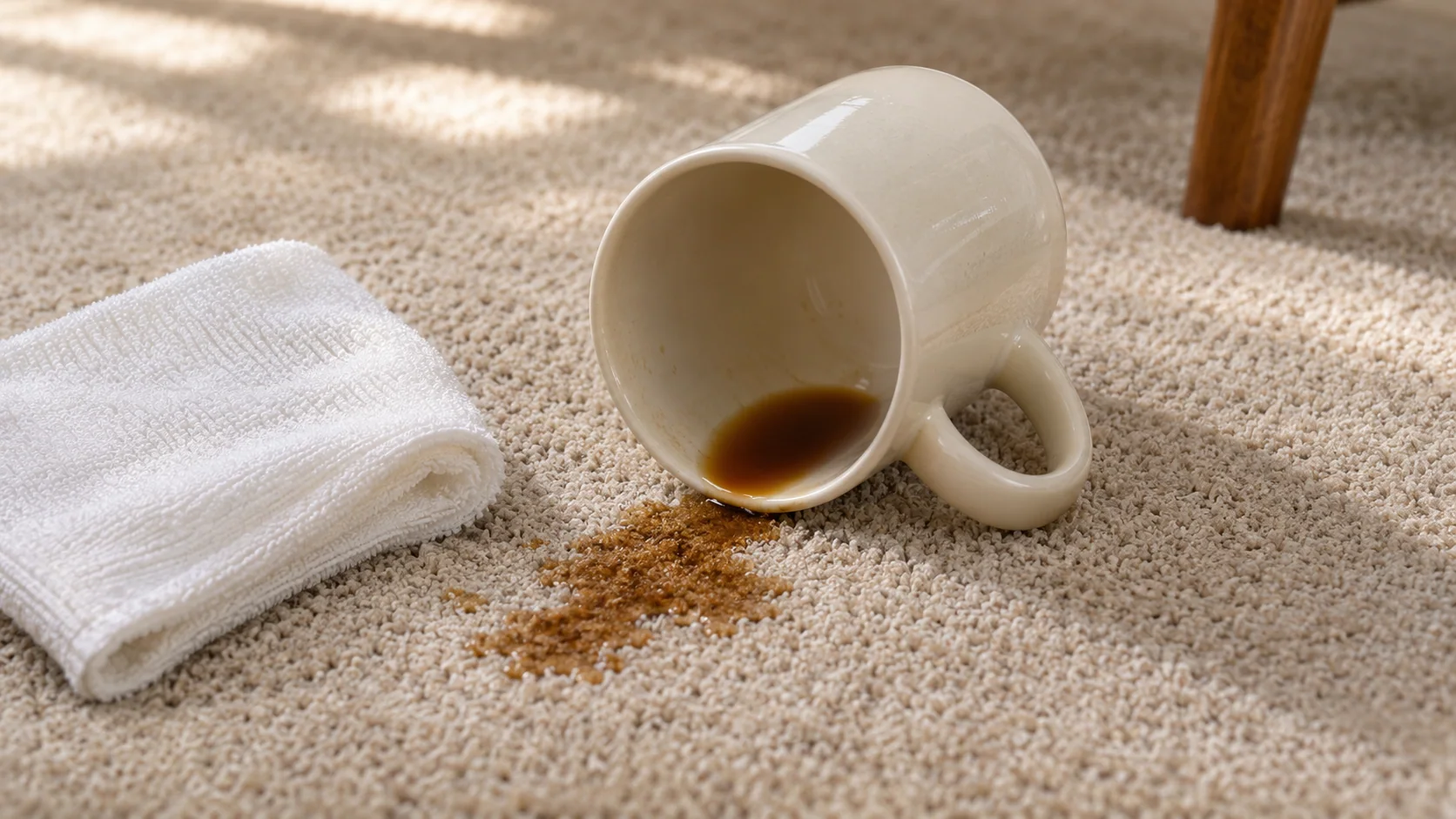
4. Coffee.
Blot fresh liquid and explain what was in the drink, including milk or other additions. The visible brown mark may not describe all the residue involved. Avoid saturating the area while trying to make the spot disappear, and follow the approved care directions.
Recurring appearance after drying is useful information. Note whether the spot changed size or returned after an earlier clean rather than repeatedly adding product. That history can help distinguish remaining material, residue and color changes.
5. Pet accidents.
Urine-related concerns can include a mark, odor and contamination beyond the visible surface. CRI warns against using a household steam cleaner on urine spots because heat can set the stain and smell. Seek material-appropriate advice rather than masking an odor with fragrance.
Explain whether the accident was recent, repeated or associated with an area that still smells after drying. A standard carpet clean and work involving backing or padding are not automatically the same scope. Results and any additional treatment should be discussed individually.
Know when to stop treating.
If suitable first care does not resolve the concern, keep a note of what was used and ask for assessment. More chemical strength, pressure or heat does not guarantee a better result. Cleaning cannot be promised to restore every faded, bleached or physically damaged area.
A quick first-response comparison.
Swipe to compare →
| Spill | Useful first action | Detail to record |
|---|---|---|
| Chocolate | Lift accessible semisolid material gently with a rounded spoon. | Whether it melted, was stepped on or received another product. |
| Wine | Blot fresh liquid with plain white absorbent material. | Age of the mark and any earlier treatment or color change. |
| Wax | Avoid improvised heat or solvents; ask for material-specific advice. | Wax color and whether heat has already been used. |
| Coffee | Blot promptly and check approved care before further treatment. | What was in the drink and whether the spot returned after drying. |
| Pet accident | Absorb fresh moisture and describe repeated incidents. | Whether the concern is a visible mark, odor or both. |
Why pretesting and residue matter.
CRI's spot guidance tells readers to pretest a solution in an inconspicuous area for color transfer or damage. Follow the actual material and product instructions; a test does not turn an unsuitable cleaner into a suitable one. Stop if the carpet changes in an unexpected way.
The same guidance warns that spot-removal products can leave residues that attract soil. More detergent is not necessarily a better treatment. Do not substitute a stronger homemade mixture or repeatedly saturate the area when the original mark remains.
If you need help, give the cleaner the spill history and the name of every product applied. The original substance and the attempted remedy are both part of the assessment. A faded patch after treatment may be damage rather than a stain waiting for another pass.