
A rug and installed carpet can share a room without sharing the same care requirements. Fiber, dyes, backing, construction and the manufacturer's instructions matter. Before trying a cleaning method demonstrated on another rug, identify what you have and what its label permits.
Keep the useful details together.
Look for a label, receipt, product description or care document. Note the approximate size and whether the rug has fringes, a pad, unusual backing or delicate areas. If you cannot identify the material, say so rather than choosing a treatment from appearance alone.
A general cleaning conversation does not establish that a particular company offers every specialist rug process. Ask whether the item is suitable for the proposed work. Onsite carpet care, specialist rug washing, pickup and delivery should not be assumed to mean the same service.
Vacuum according to the rug and equipment guidance.
Routine removal of loose soil is useful, but the setting and attachment need to suit the material. Follow the rug and vacuum manufacturers' instructions, especially around edges and fringes. Do not treat the most aggressive brush action as the default for every piece.
Check how the rug is used in the room. An entrance area or route beside a sofa may receive more traffic than an exposed corner. Describe those differences if you ask for professional assessment, and distinguish accumulated soil from wear or a color change.
Consider placement and the floor beneath it.
Follow the maker's guidance on sunlight, placement and any rotation of the rug. Check the suitability of the pad or backing for the floor underneath. Moving a rug can reveal a difference in appearance that needs assessment rather than an assumption that the darker area is dirty.
If a spill has reached the backing or pad, mention it. The visible face does not describe every layer. Avoid soaking a rug in place, especially when the consequences for the floor, backing or dyes are uncertain.
Respond carefully to spills.
For a fresh liquid on an appropriate carpet or rug surface, CRI's general spill-care guidance starts with blotting using dry white absorbent material, not scrubbing. The rug's own care instructions still control what further treatment is suitable. Do not turn a broad tip into permission to use any household cleaner.
Note the substance and what has already been applied. A dye transfer, sticky residue and a damaged fiber can be different problems. If a treatment changes the color or texture, stop experimenting and seek appropriate advice.
Know when to ask a specialist.
Unidentified materials, delicate construction, unusual dyes or a valuable piece warrant particular care. Explain those details before arranging work, not after a method has been selected. A professional should be willing to identify limits rather than promise that every rug can be treated in the same way.
For a Chandler inquiry, describe the rug and the other surfaces you want considered separately. We can discuss ordinary carpet-care options and whether the item is suitable for the proposed scope. Specialist rug washing and transport, if needed, are separate services to confirm rather than assume are included.
A useful rug-care checklist.
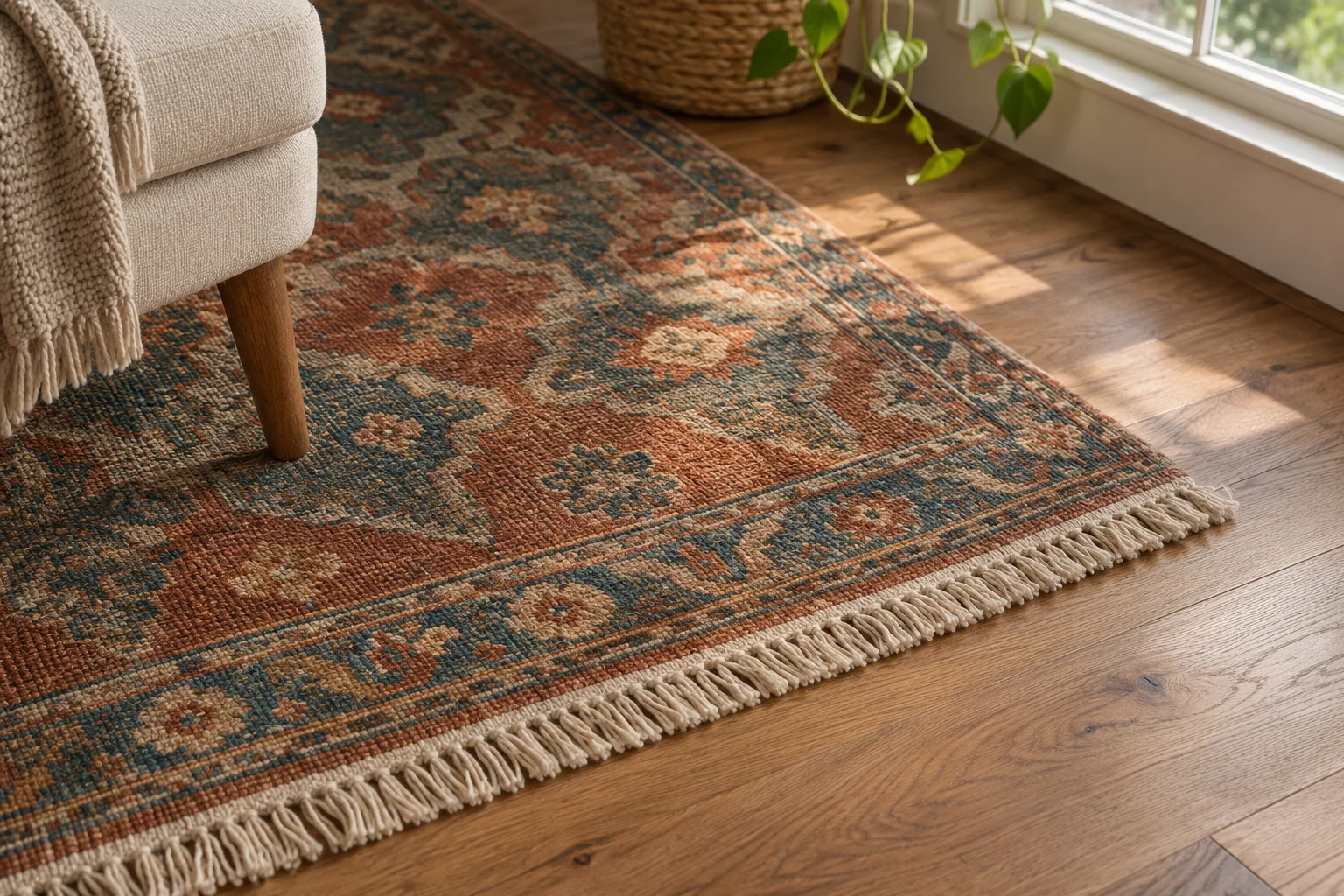
Before treating the rug, collect the details that distinguish it from the installed carpet nearby. The aim is to choose appropriate care, not to identify a fiber or dye from appearance alone.
Swipe to compare →
| Check | Why it matters |
|---|---|
| Material and construction | Similar-looking rugs can have different cleaning and drying requirements. |
| Backing and pad | Care must account for both the rug and the floor beneath it. |
| Fringe and edges | Vacuum attachments or brushes can catch or disturb delicate details. |
| Sun and foot traffic | Placement and use can contribute to uneven fading or wear. |
| Earlier products | Previous treatment can affect what is suitable now. |
Placement is part of maintenance.
Karastan's rug-care guidance discusses regular vacuuming, rotation, appropriate pads and prompt blotting. It notes that sunlight can contribute to fading. Follow your rug maker's instructions when deciding whether and how to rotate the piece, rather than copying one fixed interval onto every material.
Check that a pad is suitable for both surfaces. Do not assume every backing is compatible with a wood or other finished floor. If a spill reaches below the rug, tell the professional which layers may have been affected instead of describing only the visible spot.
Ask about the process before arranging transport or treatment.
Explain the size, label, condition and special concerns before booking. Ask whether the proposed service is appropriate for that rug, where it would be treated and how drying and handling are managed. Specialist washing or transport should be confirmed separately, not inferred from a company's ordinary carpet-cleaning page.